Seven real stories of people who got Chinese tattoos without understanding the language, and the 30-second check that would have caught every one.
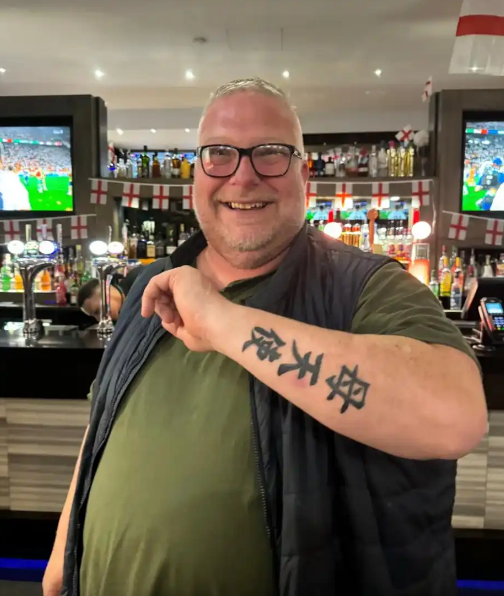
Every week, someone walks into a tattoo shop, picks a Chinese character off a wall chart or from a Google search, and gets it permanently inked on their body. No native speaker consulted. No second opinion. Just a shape that looked nice and a translation they trusted from an app that was designed to help tourists order food, not make lifelong body-art decisions.
The results range from awkward to deeply embarrassing. And once it's on your skin, it's there. Laser removal costs thousands and takes months. Cover-ups often leave a shadow of the original mistake underneath.
Here are seven stories from people who didn't know Chinese and found out too late what their tattoos actually said.
1. "Strong woman" became "female cow"
A woman in Texas wanted a tattoo that expressed her identity as a strong, independent woman. She looked up "strong woman" in a translation app and got 母牛 (mǔ niú). She liked how the characters looked: balanced, bold, easy for the artist to stencil. She got them across her upper back.
What 母牛 actually means: "female cow." A dairy cow. The kind that gives milk. Not fierce. Not empowered. A farm animal.
The app had translated "strong" as 牛, which does mean "strong" in some Northern Chinese slang (like 牛人, "awesome person"). But 母牛 is never slang. It's the literal, dictionary word for a cow that produces milk. Adding 母 (female/mother) in front turned a slang compliment into barnyard terminology.
She found out at a Chinese restaurant when the owner, trying to be polite, asked if she worked on a farm.
The lesson: English slang does not map cleanly onto Chinese slang. A word that works in one combination can mean something entirely different when you add another character next to it. Always check the full phrase, not the individual words.
2. "Free spirit" became "free of charge"
This one happens so often it's almost a genre. A man in Portland wanted "free spirit" on his forearm. He typed "free" into Google Translate and got 免费 (miǎn fèi). Clean characters, nice symmetry, easy for the artist.
免费 means "free of charge." Like a coupon. Like a giveaway. Like the word printed on a promotional flyer. The English word "free" has two completely different meanings: freedom and no cost. Chinese has separate words for each. Freedom is 自由 (zì yóu). No cost is 免费.
He walked around for three years with what read, to any Chinese speaker, as "discount" or "complimentary" before a coworker who spoke Mandarin pointed it out.
The lesson: English words with multiple meanings are the most dangerous input for a translation app. "Free," "strong," "love," "spirit" all split into separate Chinese words depending on which English meaning you intended. The app picks the most common one, which is usually the wrong one for a tattoo.
3. A lone "love" reads as something else
A college student in Michigan wanted a single character for "love" on her ankle. She found 爱 (ài) online, confirmed it meant "love" in a dictionary, and got it done.
The dictionary was right. 爱 does mean love. But in Chinese internet culture, a single 爱 standing alone reads differently than the wearer intended. On Xiaohongshu (China's Instagram), standalone 爱 in casual photos is shorthand for romantic drama, oversharing, or what Chinese netizens call 鸡汤文 ("chicken-soup content," the equivalent of "live laugh love" decor). It's not offensive, but it lands somewhere between a Facebook relationship-status update and a bumper sticker.
A two-character phrase like 深爱 (deep love) or 真爱 (true love) would have read as intentional and meaningful instead of generic.
The lesson: Single characters carry cultural baggage that compounds don't. A one-character tattoo is the highest-risk choice in Chinese because it has no context. The reader fills in the most provocative reading they know. Use two or three characters whenever possible.
4. The character picked for its "cool strokes" that means "sickness"
Someone on Reddit posted a photo of their new tattoo with the caption "I just got this, what does it mean?" The character was 病 (bìng).
They had picked it because the strokes looked cool. Dramatic, angular, visually interesting. They didn't check the meaning at all.
病 means "disease." "Illness." "Sickness." It's the character you see on hospital signs and medical warnings in China.
The Reddit thread had 40,000 upvotes. Someone commented: "You literally tattooed 'disease' on yourself because the font looked nice."
The lesson: Chinese characters are not decorative symbols. Every single one means something specific, and that meaning is known to roughly a billion people. Picking a character because its shape appeals to you, without checking what it says, is like wearing a T-shirt with a foreign word printed on it because the typography looked nice at the store.
5. "Fierce" became "chicken"
A gym enthusiast in London wanted a tattoo that conveyed ferocity, aggression, the kind of energy you bring to a hard workout. He searched for "fierce animal" and somehow landed on 鸡 (jī).
鸡 means "chicken." The farm animal. The thing you eat for dinner. In some slang contexts, 鸡 is also a derogatory term for a sex worker in Chinese.
He meant to get something like 猛 (měng, fierce) or 虎 (hǔ, tiger). Instead he got poultry. A Chinese-speaking friend at his gym noticed it during a workout and had to explain what it meant. The cover-up session cost more than the original tattoo.
The lesson: When you search for an English concept and get a Chinese result you don't understand, verify it before you commit. "Fierce animal" and "fierce" are different searches. "Chicken" is fierce in no context whatsoever. A checker would flag 鸡 as a high-risk slang word immediately.
6. "Courage" and "eternal" got swapped by two strokes
A man wanted 勇 (yǒng, "courage") on his chest. He brought a reference image to the tattoo artist, but the artist misread the character and inked 永 (yǒng, "eternal/forever").
Both characters are pronounced yǒng. The visual difference is minimal: 勇 has an extra component above the main stroke structure. 永 lacks it. From a tattoo artist's perspective, working from a small reference on a phone screen, the two can look nearly identical.
The result wasn't offensive. It just wasn't what he asked for. He wanted a statement about bravery. He got one about permanence. Those are different philosophies. He carried the wrong one for eight months before a Chinese-speaking colleague read it and asked why he chose "forever" instead of "courage."
The lesson: Chinese has hundreds of homophone pairs. Tattoo artists typically work from visual references, not meaning dictionaries. Always bring a printed, character-by-character sheet to the consultation, not just a photo. A checker flags homophone collisions before you sit down.
7. "Forever love you" became "forever love ALL of you"
A man had 永远爱你 (yǒng yuǎn ài nǐ) tattooed on his arm as a romantic gesture for his partner. "Forever love you." Clean, meaningful, correct.
But the stencil that went on his skin read 永远爱你们 (yǒng yuǎn ài nǐ men). That 们 suffix turns "you" into "all of you." "Forever love all of you" sounds like a group message. Like he's addressing a crowd. Like a polyamorous manifesto.
The mistake was one character. One stroke cluster. The immigration officer at a Chinese airport was the one who noticed it and gave him a long, confused look. Laser removal was quoted at roughly $4,000 and 10 to 14 sessions.
The lesson: English hides information that Chinese has to spell out: singular vs. plural, gender, tense, formal vs. informal. Always show the final Chinese line to a native speaker before the stencil goes on.
What all seven stories have in common
None of these people were careless in the way they thought they were being careful. They used translation apps. They checked dictionaries. They asked tattoo artists. The problem isn't that they didn't try. The problem is that the tools they trusted weren't built for this task.
Translation apps are designed for travel, business, casual communication. They give you a literal, context-free answer. The word you're translating may carry a slang reading the dictionary never shows. The character you picked may already be a meme in Chinese internet culture. And a single character standing alone often reads differently than it does inside a phrase.
Dictionaries are even worse for this. A dictionary tells you what a word meant when the dictionary was compiled. It doesn't tell you what the word means on Weibo this afternoon.
And tattoo artists, most of them, are not Chinese speakers. They work from visual references. They can't read the characters they're stenciling. The artist who swapped 勇 for 永 did it because the two characters look almost identical and he had no way to know the difference.
Why a dedicated Chinese tattoo checker is different
This is what the Chinese Tattoo Checker on ChineseToolkit was built to solve. It's not a general translation tool. It's a specific tool for one high-stakes decision: what Chinese characters go on your body permanently.
Here's what it does that translation apps and dictionaries can't:
1. Instant meaning verification. Type an English word or paste Chinese characters. The checker tells you what it literally means, what it means in context, and what it sounds like to a native Chinese speaker today. Not five years ago. Today.
2. Slang and cultural risk scoring. The checker scans for internet slang associations, meme usage, political connotations, and regional readings that a dictionary will never mention. 母牛 gets flagged because the slang context doesn't apply when combined with 母. 免费 gets flagged because "free of charge" is the dominant meaning, not "freedom."
3. Safer alternatives. For every word you check, the tool suggests 3 to 5 alternative Chinese phrases that mean what you actually intend, ranked by risk. Want "strong woman"? The checker suggests phrases that convey that idea in Chinese, not ones that translate the English words literally and miss the meaning.
4. Four-dimension risk score. Each suggestion gets a 0-100 score across meaning accuracy, slang safety, cultural fit, and tattoo aesthetics. You can compare options side by side before you book the appointment.
5. Homophone collision warnings. Every result includes pinyin so you can verify you're saying what you think you're saying. The checker flags homophone collisions (like 勇 vs 永) before the artist misreads the reference.
The free tool gives you pinyin, literal meaning, a slang-association scan, a cultural risk score (0-100), and 3 to 5 safer alternative phrases. Type English, paste Chinese, or upload a sketch. Runs in seconds, no signup.
When you want more than a quick check
The free checker catches most problems in seconds. If you want something even more thorough, the paid Safety Report ($9.9) gives you a printable PDF with:
- Four calligraphy style PNGs (Regular, Running, Cursive, Clerical) you can hand to your tattoo artist so they stencil exactly the right character
- A body placement guide with size recommendations and pain-level notes for six locations
- Cultural context: historical origin, philosophical associations, modern usage, and regional differences
- An artist reference card with stroke order, minimum size, color advice, and layout
- A pronunciation guide with audio playback and simplified/traditional toggle
The artist reference card alone prevents the 勇/永 swap and the 们 typo that turned a love letter into a group broadcast. Your tattooist gets a clean, character-by-character reference they can read without guessing.
The bottom line
A tattoo is permanent. The check takes 30 seconds. The seven people in this article all thought they'd done their homework. None of them had used a tool built for the one decision they were actually making.
Before you sit in the artist's chair, run your idea through the checker. Type the English word, paste the Chinese characters, or upload the sketch you're considering. Read the meaning, the pinyin, the risk score, and the safer alternatives. If anything flags red, pick one of the alternatives instead.
Go to chinesetoolkit.com/tattoo-checker and run the free check. It's the 30 seconds between you and a mistake that lasts forever.